


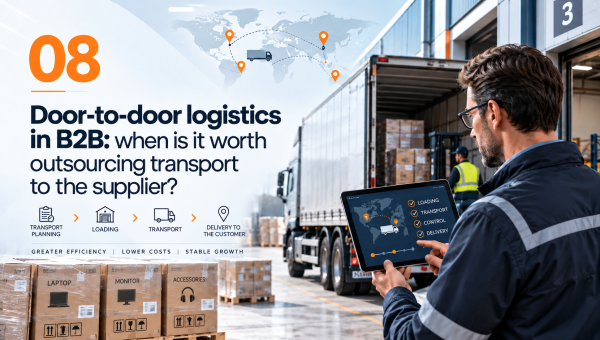
In B2B purchasing, transport can be treated as a separate service or as part of the transaction. Door-to-door delivery simplifies coordination, but it is not always the lowest-cost option. The decision should reflect cargo value, route, volume, timing and your own logistics capabilities.
Door-to-door means fewer points to coordinate
If the supplier or broker organizes transport from the source warehouse to the specified destination, the buyer does not need to arrange collection, carrier selection and part of the operational paperwork separately. This is especially convenient when stock is in another country or collection must happen quickly.
Convenience only has value when the transport terms are clear: timing, price, insurance, delivery address, unloading method and responsibility for damage.
When does supplier-organized transport make sense?
- for a one-off stock lot from an unfamiliar warehouse,
- when the supplier has established rates on the route,
- for an urgent order that you do not want to coordinate through several parties,
- when you do not have your own freight forwarder in that market,
- when you want one price covering the goods and delivery to your warehouse.
When can your own freight forwarder be better?
A company that regularly moves similar loads may have better rates and greater control over the route. Your own carrier also gives you the ability to consolidate several collections from different suppliers. This can be valuable when purchases are spread across multiple European warehouses.
In this model, the supplier should prepare the goods for collection and provide the complete logistics data.
1. You need dimensions and weight
“Two pallets of laptops” is not enough information for a freight quote. The carrier needs the number of pallets or cartons, dimensions, weight, address, loading-dock availability and collection time. With electronics, cargo value also matters because it affects insurance.
2. Check the packing method
Original cartons on a pallet, a loose mix, equipment separated with protective layers or a stackable pallet all create different risks. A photograph of the prepared load before collection is a simple tool that can later help assess responsibility for any damage.
3. Insurance should match the cargo value
It is not enough to know that the carrier “is insured”. You need to know which liability applies to the specific shipment and whether the value of the electronics exceeds the practical level of protection. For high-value lots, check this before loading.
4. Time is a cost
Transport that is several hundred euros cheaper may be a worse choice if it delays sales by a week during strong demand. Conversely, express delivery makes little sense for slow-moving stock. Logistics should match the economics of the lot.
5. Define the receiving procedure
The person receiving the goods should know what to check before signing documents. Unit count, visible damage, stretch-wrap and pallet condition and any reservations should be recorded immediately. This matters if a damage claim is filed later.
6. Door-to-door does not remove the need to verify terms
One delivery price simplifies settlement, but you still need to understand the point of responsibility and the scope of service. Does the price include only transport? What about insurance, customs clearance, inside delivery or additional booking requirements? The more precise the arrangements before shipment, the fewer extra charges later.
Logistics should support the purchase, not complicate it
Depending on the transaction, eyayt.com can arrange door-to-door transport or prepare the goods for collection by your nominated freight forwarder. See the offer for more information.
If you have a specific destination and volume, send an enquiry with the destination country so the available logistics options can be assessed immediately.