


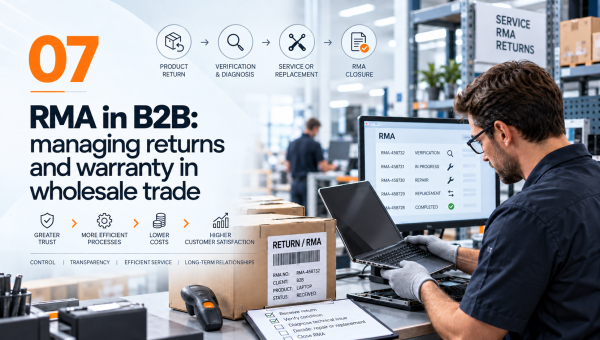
RMA is part of electronics trading, not a failure of the process. Clear return and warranty rules make it possible to price the risk of a lot before purchase. The biggest problems appear when the procedure is only discussed after the first defective unit is found.
RMA should be negotiated together with price
In wholesale, it is easy to focus on unit price and delivery date. Even a small defect rate in a large lot, however, can generate significant cost. Claim rules should therefore be part of the commercial offer alongside payment and logistics.
Before purchasing, know what the supplier defines as DOA, which faults are covered, how long you have to report them and how an accepted claim is settled.
DOA and warranty are not the same thing
DOA usually concerns a device that is non-functional from the start or develops a fault immediately after delivery. Warranty covers a broader period and may be handled by the manufacturer or seller. These routes can have different deadlines and documentation requirements.
If the lot has manufacturer warranty, check its status in the target market. If seller warranty applies, know the return address and procedure.
1. Record serial numbers
For IT equipment, the serial number allows a claim to be linked to a specific delivery. The warehouse should be able to identify which lot a unit came from. This makes communication with the supplier easier and helps detect whether the problem affects one device or an entire SKU.
2. Collect evidence using one standard
Photos of damage, a startup video, error code, serial number and a short test description should be collected using one checklist. This prevents teams from repeatedly asking the customer for missing information and gives the supplier a complete claim package.
3. Agree who pays return freight
In cross-border trade, returning a single unit can be disproportionately expensive. In some cases, it is better to consolidate accepted claims and ship them together. In others, the supplier may issue a credit note without a physical return. These rules should be agreed before purchase.
4. Measure processing time
Track the average time from claim submission to decision. A slow RMA process ties up money and damages your own customer experience. Supplier quality should therefore be assessed not only by the percentage of accepted claims but also by response speed.
5. Create a risk reserve for the lot
If a category historically generates a known claim rate, include it in the margin calculation. The reserve may be lower for new stock than for open-box or refurbished goods. The key is to price the cost before it occurs.
6. Separate product faults from transport damage
A crushed carton and a broken display caused in transport require a different route from a product defect. At receipt, document visible damage and shipment quantities so you know whether the claim should go to the carrier, insurer or supplier.
7. Watch for repeated issues within one SKU
If several units from the same lot have the same fault, subsequent claims should not be treated as isolated incidents. This is a signal to pause sales of the remaining units and perform additional inspection.
RMA checklist for procurement teams
- DOA reporting period,
- warranty period and responsible party,
- required photos, videos and serial numbers,
- return-transport cost,
- settlement method: replacement, refund or credit note,
- average response time,
- rules for repeated faults within one lot.
Basic post-purchase information is also available in the eyayt.com FAQ. If you want to confirm RMA terms for specific stock, contact us before placing the order.